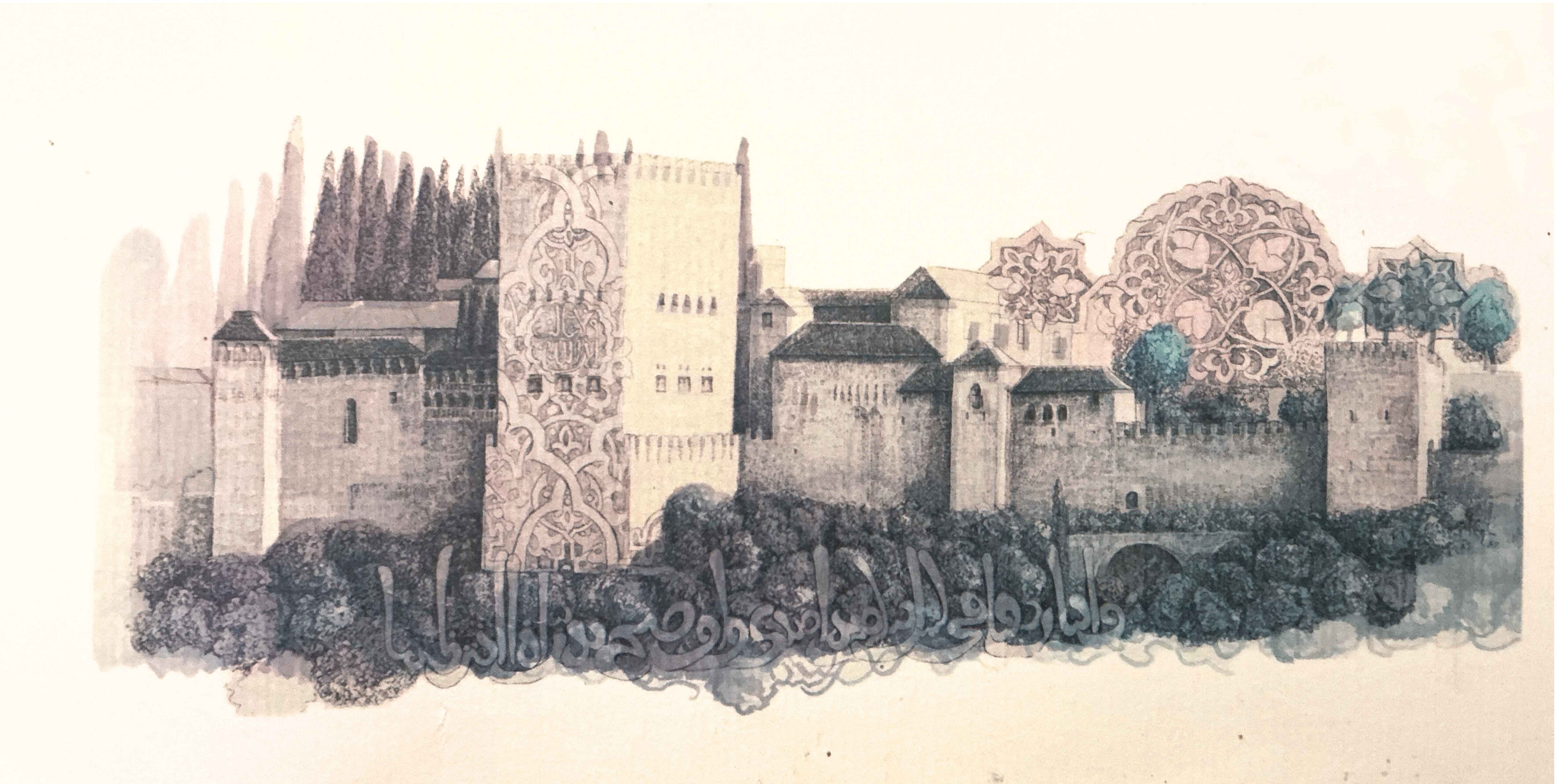
The Mill and the Caravan
A manuscript found among the notebooks of the Scribe who kept a desk beneath the old Mill.
⧉ copy .md↓ download .mdseed (not yet saved to db)
Prelude
On the Finding of These Pages
✎ These pages were found beneath a desk, and the desk beneath a mill, and the mill at the edge of a village that had very nearly given up. They bear no author's name. The one who kept the desk did not claim to have written them; he said only that he had copied them, and that he had listened long enough to know the voices apart. The Mill, he would say, was always speaking. He had merely learned the patience to hold the pen while it did.
He kept the scrolls in ranks beneath the desk — thousands of them, and not all his own: maps he had never walked, ledgers of trades long settled, copies of masterworks he could not have afforded to own, histories of towns that no longer stood. When a story was needed he did not invent it. He reached under the desk, found the scroll that fit, and let it speak. What follows was one of those.
Chapter One
The Mill, the Scribe, and the Little Theatre
✎ The windmill stands on the last rise before the vega, and the village curls around it the way a hand curls around a warm cup. It is not a grand mill. Its sails are patched, its timbers silver with weather, and on a still day it does nothing at all but creak and wait. But when the wind comes off the mountains it turns, and the whole village seems to lean into the turning — for this mill is their landmark, the thing a caravan picks out from a day's ride off and steers toward the way a ship steers toward a light, and the thing that carries the village's name outward on the same wind that fills a sail. A traveller once left a poem at the door — if you are a man of resolve, you need a mill that works with the clouds, without depending on streams — and the windmill has been quietly proud of it ever since.
There is another mill, older, that almost no one visits. It sits lower and further back, in a fold of the hills where an acequia the first farmers cut still runs cold and steady off the mountain. That is the watermill, and it does the deep work — the grinding that never stops, patient and unseen: the Millstone in its throat, the Sieve at its judgement, the Chronicle keeping its cool accounts in the dark. The village lives on what the watermill makes and rarely thinks of it, the way one rarely thinks of the water in the well. It is not where the stories happen. It is only the reason they can be true.
Beneath the windmill, at the edge of all this turning, sleeps the Scribe.
He is not the miller. He owns nothing here but his desk, the scrolls beneath it, and the ink that is half-dry by every morning. Once he had a good trade — letters written, routes reckoned, contracts set down for every caravan that passed. Then his own apprentice, whom he had taught patiently and well, took the trade out from under him: quicker, cheaper, hungrier, and not unkind about it, which somehow made it worse. What the Scribe kept was the part the apprentice did not want — the listening. The scrolls. The old voices. And, lately, an idea.
The idea was the village's, though the Scribe gave it its shape. The market had thinned; the caravans that once broke their journey here for a night had taken to passing straight through. So the village raised a theatre — a poor thing, a few boards and a curtain in the empty corner of the old market, near enough to the windmill that its sails turn behind every scene. And the plays it stages are strange ones, for the players do not perform kings or lovers. They perform the crafts themselves: the Loom is given a voice, and the Scale, and the Crier at the gate; the tools of the village step out of the wings and speak their own work aloud. The Scribe supplies the scripts — reaches under the desk, finds the scroll that fits the night, and hands it up. The villagers do the rest.
It is not, if you look at it plainly, a way to sell anything. And yet it works the way selling is supposed to and seldom does. A caravan that stops for the play stays the night; a caravan that stays the night eats the village's bread, shoes its mules at the village's forge, drinks from the village's aljibe, and leaves in the morning carrying — without quite meaning to — the village's stories. Those stories are told again at the next waystation, and the one after, until a stranger the village will never meet arrives one day already knowing the name of the mill on the rise. That is the whole of the plan: the watermill in the hills does the deep grinding out of sight; the windmill on the rise catches the wind and sends the tale to the world.
So the crafts wait in the wings, the Scribe sharpens his pen, and the caravans come down off the pass into the last light.
Part I